

How To Open Plastic Battery Box
In our van project, where exercise we put all of the electrical parts? We chose to make our ain bombardment housing out of plywood since our van has two big AGM (absorbed glass mat) batteries.
A battery box is non necessary for sealed batteries like AGM or LiFePO4.
Battery boxes are essential with older wet cell lead acid batteries since sealed batteries should not leak or vent corrosive vapors if charged and discharged correctly.
These are two reasons why.
However, we still considered having a bombardment box for our batteries to be a good idea since it would:
- Make a container to isolate the batteries from everything else in our back storage space.
- Avoid shorting or allowing the bombardment connections to make contact with something they shouldn't
- Keep canis familiaris hair, dirt, filth, and other contaminants away from the batteries.
- Give some protection in case the batteries or charging mechanism experience a catastrophic failure.
A battery box may not be required for AGM batteries, simply we felt comfy having one.
Additionally, none of the commercially available battery cases would suit our unusually sized cells.
Thus, we created our own.
This article explains how.
Tabular array of Contents
- Is a Bombardment Box Even Necessary?
- Our Battery Box's Design
- Putting the Battery Box Together
- Materials Nosotros Used to Construct Our Battery Box
- Step 1: Measure And Cut The Pieces Of Plywood
- Pace 2: Drill Pocket Holes
- Step 3: Screw The Box Together.
- Step 4: Cut one×iii'south for Spacer
- Step five: Install a Spacer
- Step 6: Verify the Batteries Fit
- Step 7: Drill Vent and Wiring Pigsty Holes
- Step 8: Install the Anchor Points for the Ratchet Straps
- Step ix: Layer Plastic Sheeting Inside The Box (Optional For AGM Or LiFePO4 Batteries)
- Footstep ten: Install The Lid, Hinges, And Latch
- Step 11: Accept A Look At The Completed Bombardment Box
- Step 12: Install Battery Box Within Van
- Stride 13: Tie Downward Straps Are Used To Secure Batteries.
Is a Battery Box Even Necessary?
Sincerity speaking, probably non (unless y'all're using outdated flooded atomic number 82 acid batteries).
Nowadays, the bulk of batteries y'all'll really buy are either lithium iron phosphate (LiFePO4 or LFP) batteries or maintenance-complimentary AGM batteries, neither of which demand to be contained.
While some kind of terminal protection is advised, a dissever battery cabinet is obviously overboard.
Our Battery Box's Design
Our 2 VMAX 155ah deep bike batteries are housed in a battery box that we manufactured.
They mensurate around thirteen-12″ long, half-dozen-34″ wide, and 11-12″ tall.
Our bombardment box's inside needed to be around a 14″ 10 fourteen″ square since we chose to have them sit down side by side.
Additionally, we need a lot of space in a higher place the battery connectors.
The parts nosotros chopped are shown below:
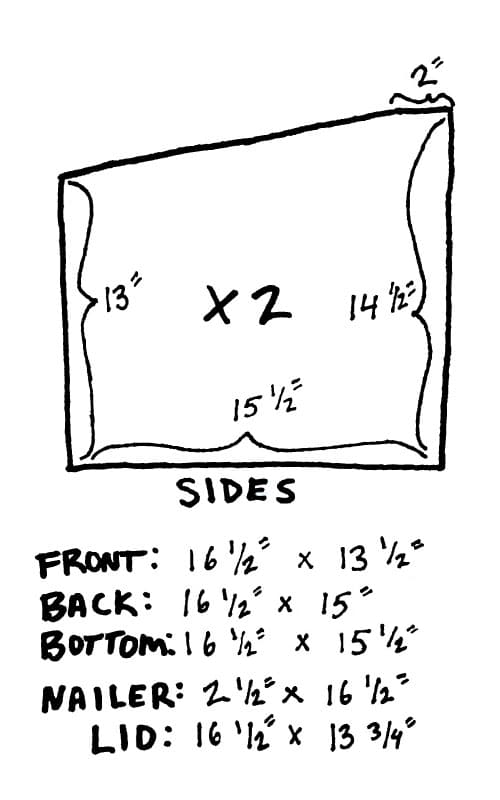
The rear of the battery box is higher than the front.
For two reasons, we angled the top of the battery box upward:
- Once the battery box is put underneath our pull-out queen-sized bed frame, information technology will exist a little bit simpler to elevator the hat and achieve the batteries.
- The elevated section offers the hydrogen gas someplace to arise and vent out via the vent holes that we constructed if our batteries did leak hydrogen gas. When vented out to the bigger area of our vehicle, hydrogen is less harmful since it may be explosive when contained in a tiny infinite similar a bombardment box.
Note: Gas venting from AGM batteries is quite unusual. All of this is preventative.
In society to assistance contain battery acid in the (very rare) instance of a leak, we additionally lined the inside of the battery box with plastic.
If y'all already have LiFePO4 batteries, skipping this step is not essential at all.
Putting the Battery Box Together
Materials We Used to Construct Our Battery Box
- ½" Birch Plywood
- i×iii furring strips
- half-dozen Mil Plastic Sheeting
- i-½" Bending Brackets
- 1" Pocket Pigsty Screws
- i-¼" Pocket Hole Screws
- one" GRK Cabinet Screws
- 1-¼" GRK Trim Head Screws
- ane-½" Spade Drill Fleck or Pigsty Saw
- 3/four″ Self-borer Screws
- 12" Piano Hinge
- Safety Hasp (Latch)
- Gorilla Tape
- 3M High Strength 90 Spray Adhesive
- Titebond Ii Wood Gum
- Tie Down Straps
- Light Duty D-Band Anchor Points
- Kreg Jig Pocket Hole Kit
- Cordless Drill
- Carpenter'southward Square
- Jigsaw
Step 1: Mensurate And Cut The Pieces Of Plywood
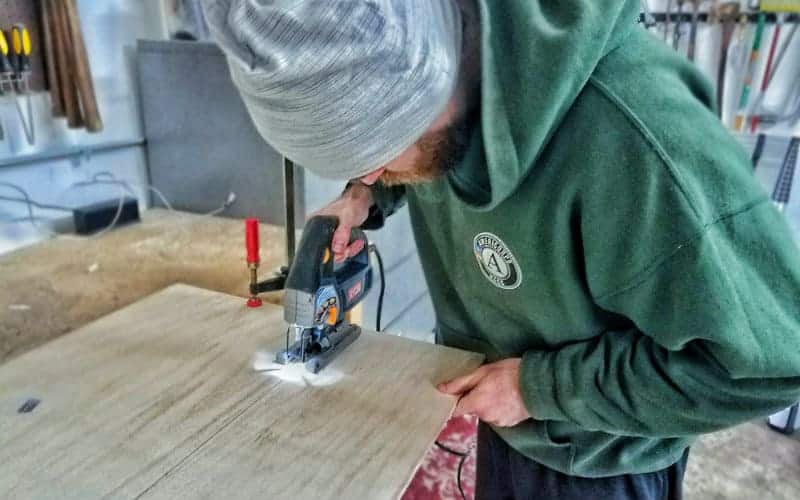
We started by using our reliable jigsaw to cut off each piece of plywood.
We initially used a carpenter's foursquare to mark the dimensions on the plywood for the angled sections.
Pace 2: Drill Pocket Holes
Using pocket holes, nosotros joined the box'southward sides together.
If you aren't acquainted with pocket hole joinery, it is a game-changer for woodworking projects.
See our article on how to use pocket holes in a van construction.
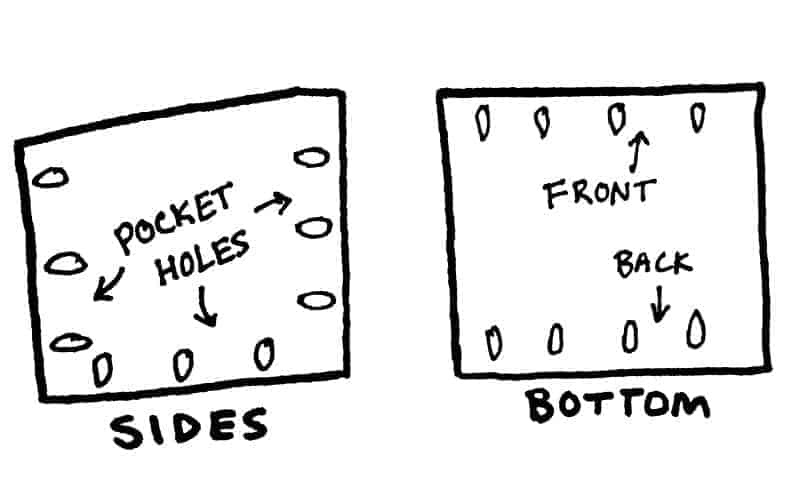
Every side of the angled side pieces, save the top, has a pocket hole.
On the sides facing the front and rear of the box, the bottom portion was given pocket openings.
Step iii: Screw The Box Together.
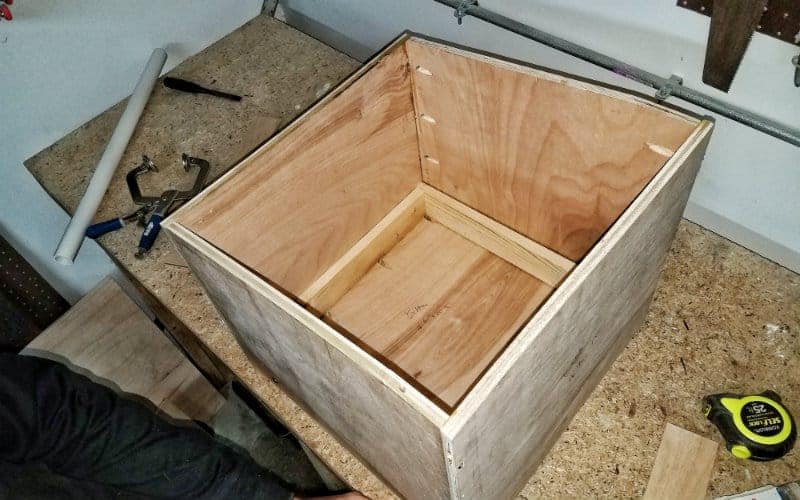
We assembled the box using 1″ pocket pigsty screws after drilling the pocket holes.
While we inserted the screws, our Kreg right-angle clamp really helped go on everything in alignment and in position.
Footstep four: Cut 1×iii's for Spacer
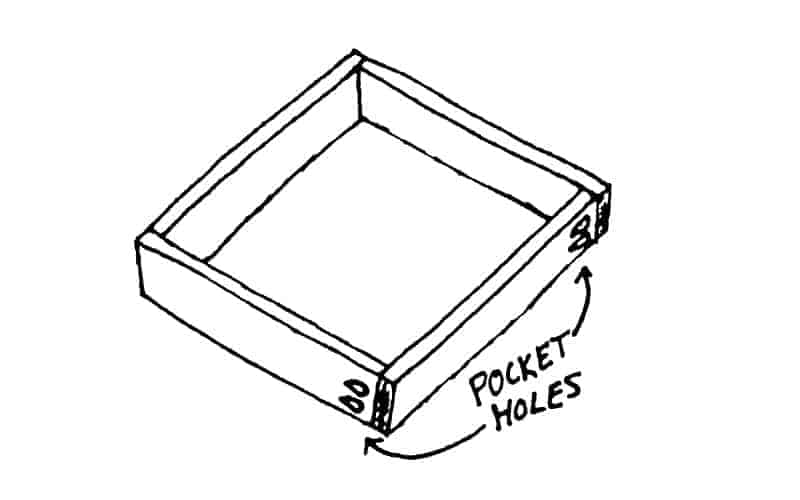
We needed a mechanism to secure the batteries within the battery box since nosotros congenital the box with some jerk area to allow for ventilation.
As a result, nosotros used pocket holes and 1-14″ pocket hole screws to join 13 furring strips into a foursquare to create a spacer.
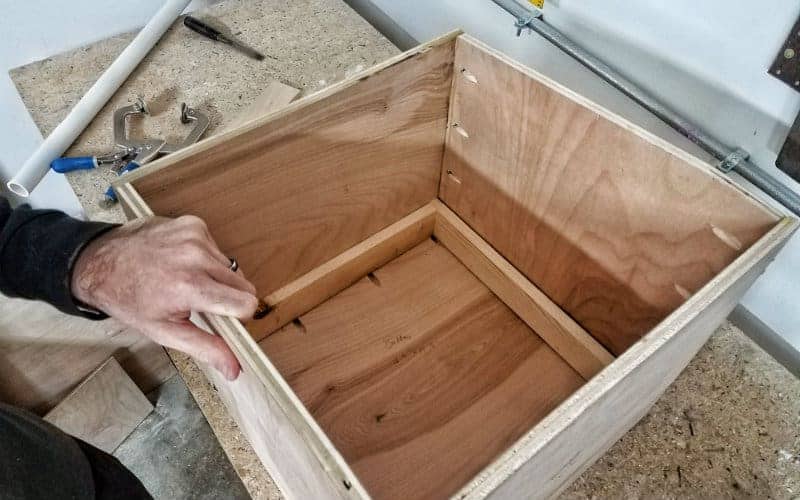
Our battery box's bottom accommodates the spacer perfectly.
Pace v: Install a Spacer
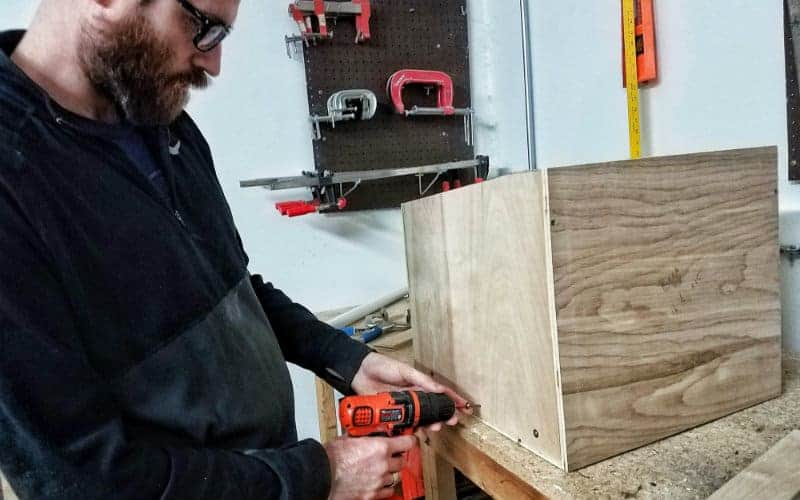
Nosotros firmly fastened the spacer with 1″ GRK cabinet screws pushed in from the exterior after positioning it within the bombardment box.
Step 6: Verify the Batteries Fit
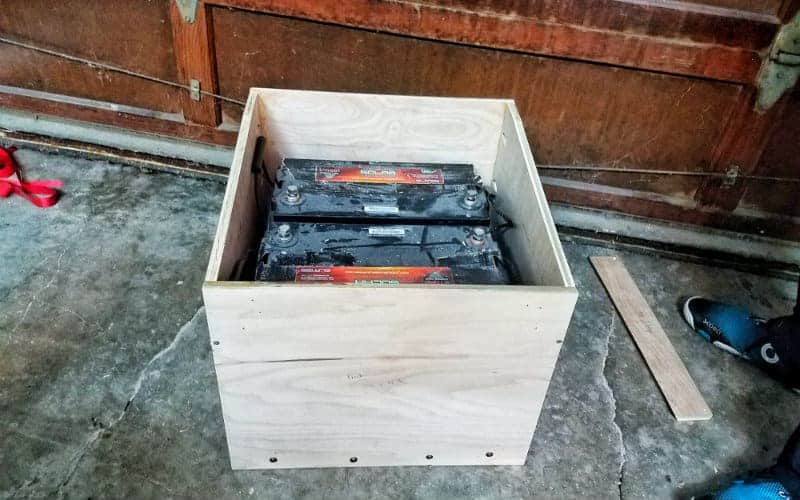
We didn't make any mistakes with our measurements, as shown by the dry-fitting of the batteries!
Step vii: Drill Vent and Wiring Pigsty Holes
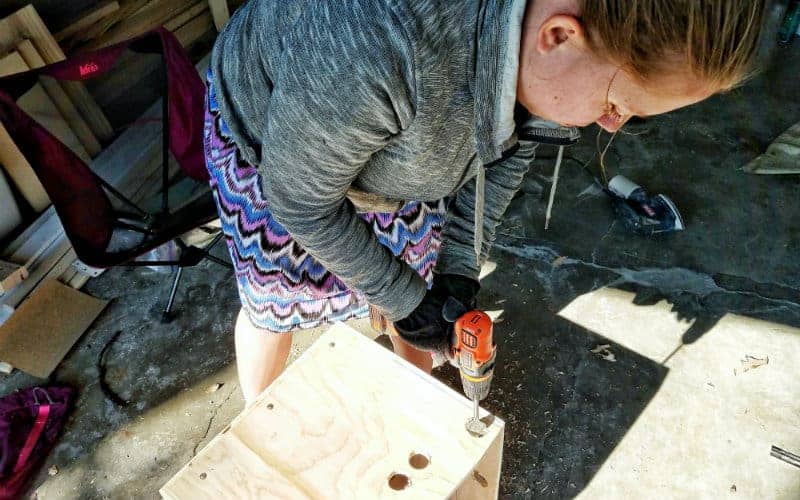
We used a one-12″ spade drill scrap to make a number of holes in the front, sides, and rear of the battery box for ventilation (a hole saw would work too).
Four holes were drilled onto the front of the bombardment box a few inches below to allow fresh air in.
To permit any released hydrogen to ascent up and escape, we drilled holes directly at the top of the angled side pieces and three more holes along the pinnacle of the rear piece (this is very unlikely with AGM batteries).
On the left side, which is the side closest to the remaining electrical components, we also bored holes halfway down for our wire.
Stride 8: Install the Ballast Points for the Ratchet Straps
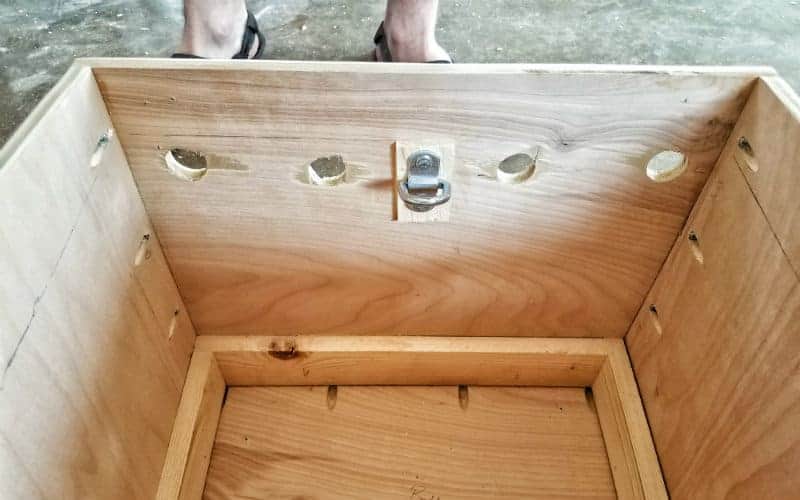
Nosotros may secure our batteries using the two D-band anchor points within the bombardment box (one on the front and one on the rear).
We installed them using three″ self-tapping screws, Titebond II wood adhesive, and a piece of 1″ plywood equally a spacer.
Step nine: Layer Plastic Sheeting Inside The Box (Optional For AGM Or LiFePO4 Batteries)
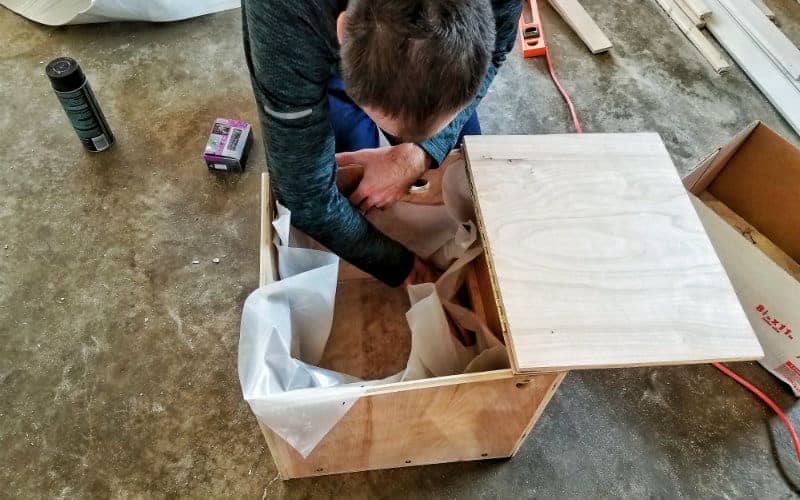
Just in case anything goes horribly wrong and there is an acid leak, we lined the interior of the bombardment box with plastic (again, very unlikely with AGM batteries).
Wood will be destroyed by battery acid, but plastic volition stop it.
Using 3M High Strength ninety spray adhesive, we purchased a curlicue of half dozen-mil plastic sheeting and adhered 4 layers, going approximately halfway up the within of the bombardment box.
To prevent the top from collapsing in, nosotros too utilized Gorilla tape.
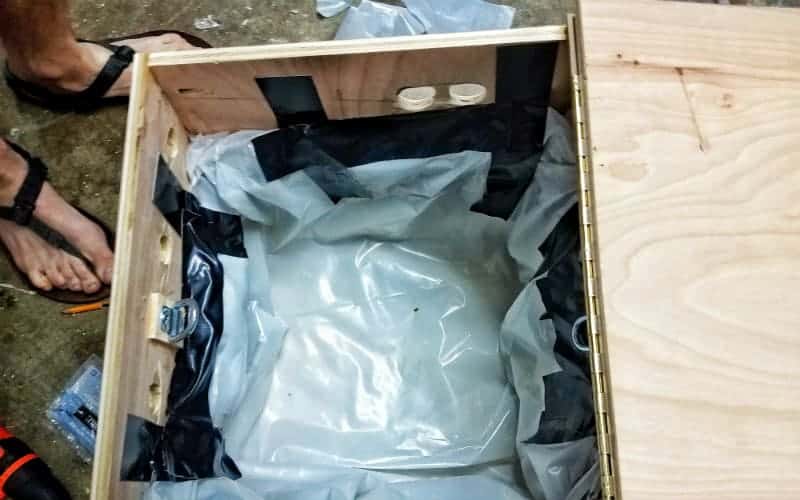
You may also coat the inside of a hardwood battery box with epoxy and fiberglass if you want something that looks cleaner and don't heed getting your hands a footling more filthy.
It was simpler, we reasoned, to line information technology with plastic.
Annotation: With AGM or LiFePO4 batteries, this step is not necessarily essential.
Step 10: Install The Hat, Hinges, And Latch
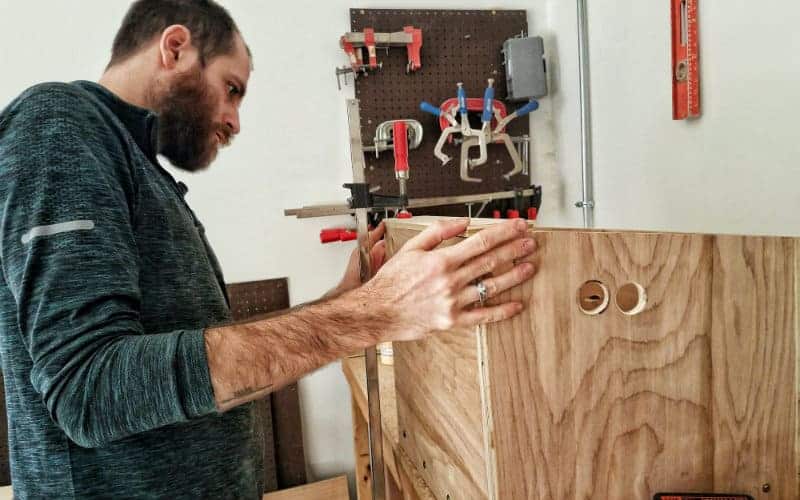
First, nosotros used 1-14″ GRK trim caput screws and Titebond II wood adhesive to attach a nailer strip to the flat portion of the battery box's meridian.
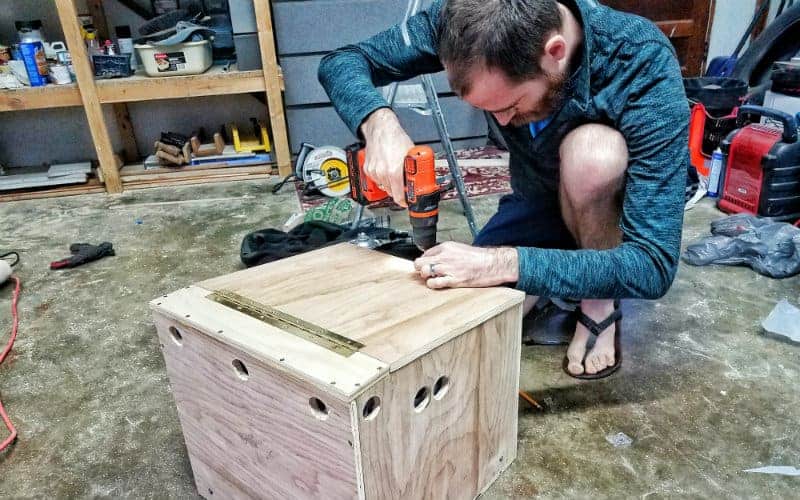
The hat was then placed, and the piano hinge and safe hasp latch were added.
A Report from the Road
Once the battery box was installed beneath our bed, it proved to exist a piffling challenging to completely lift the top.
Nosotros divided the lid in half and added an boosted swivel to remedy this problem so that information technology requires less infinite above the container to completely open.
Step 11: Take A Wait At The Completed Bombardment Box
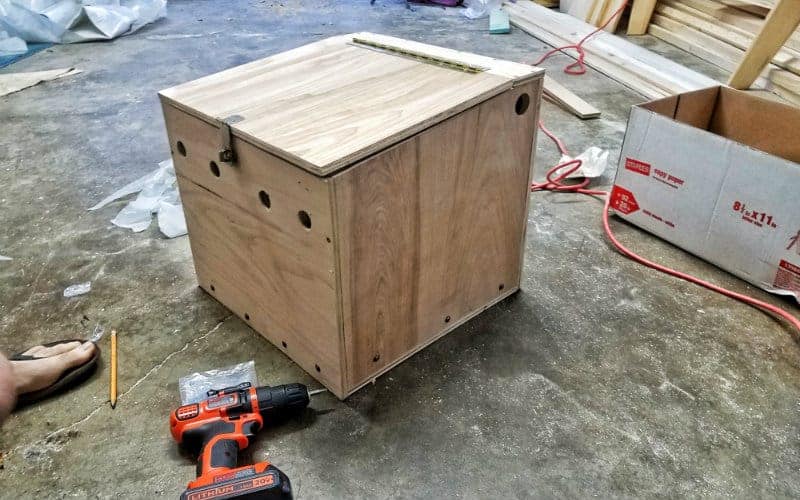
Reflecting on your development is something you should practice oft.
Step 12: Install Battery Box Inside Van
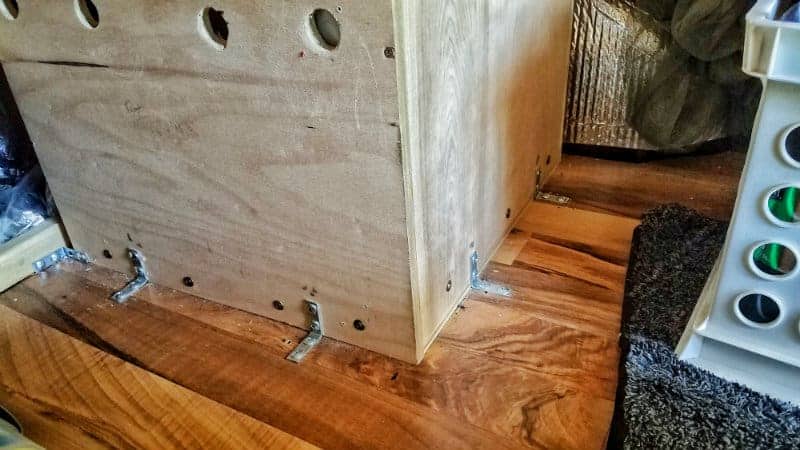
Afterwards positioning the bombardment box where nosotros wanted it, we used a ton of 1-12″ angle brackets and 34″ cocky-borer screws to adhere it directly to the laminate flooring and bed frame.
There's no moving this thing!
Stride xiii: Necktie Down Straps Are Used To Secure Batteries.
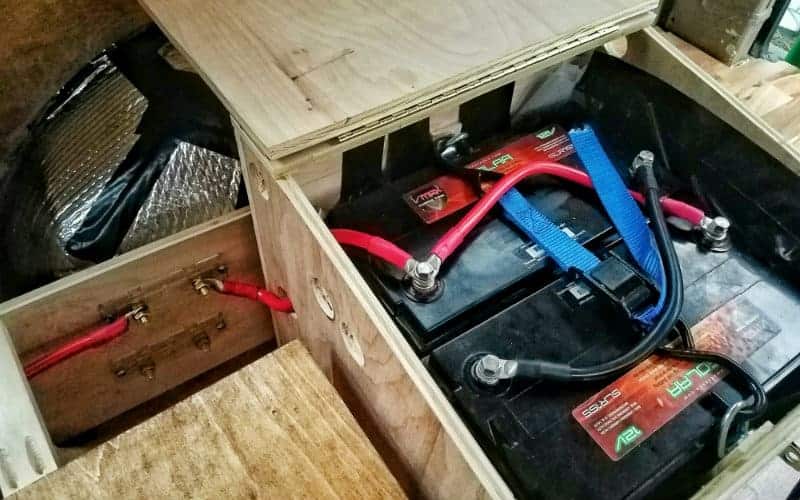
We then tied them downward and inserted the batteries.
The exciting phase will now exist connecting our electric system!
And that is the fast and easy way to construct a plywood battery box.
This box is far more than durable than many commercially available plastic bombardment boxes, accomplishes the function nosotros demand it to do, and is specifically sized for our vehicle and batteries.
With sealed batteries, a battery box may non be necessary, simply we still believe it's a terrific add-on to our vehicle.
Source: https://www.rvingbeginner.com/how-to-build-a-battery-box
0 Response to "How To Open Plastic Battery Box"
Post a Comment